Fuel Contamination Threatens Aviation Safety and Economic Stability
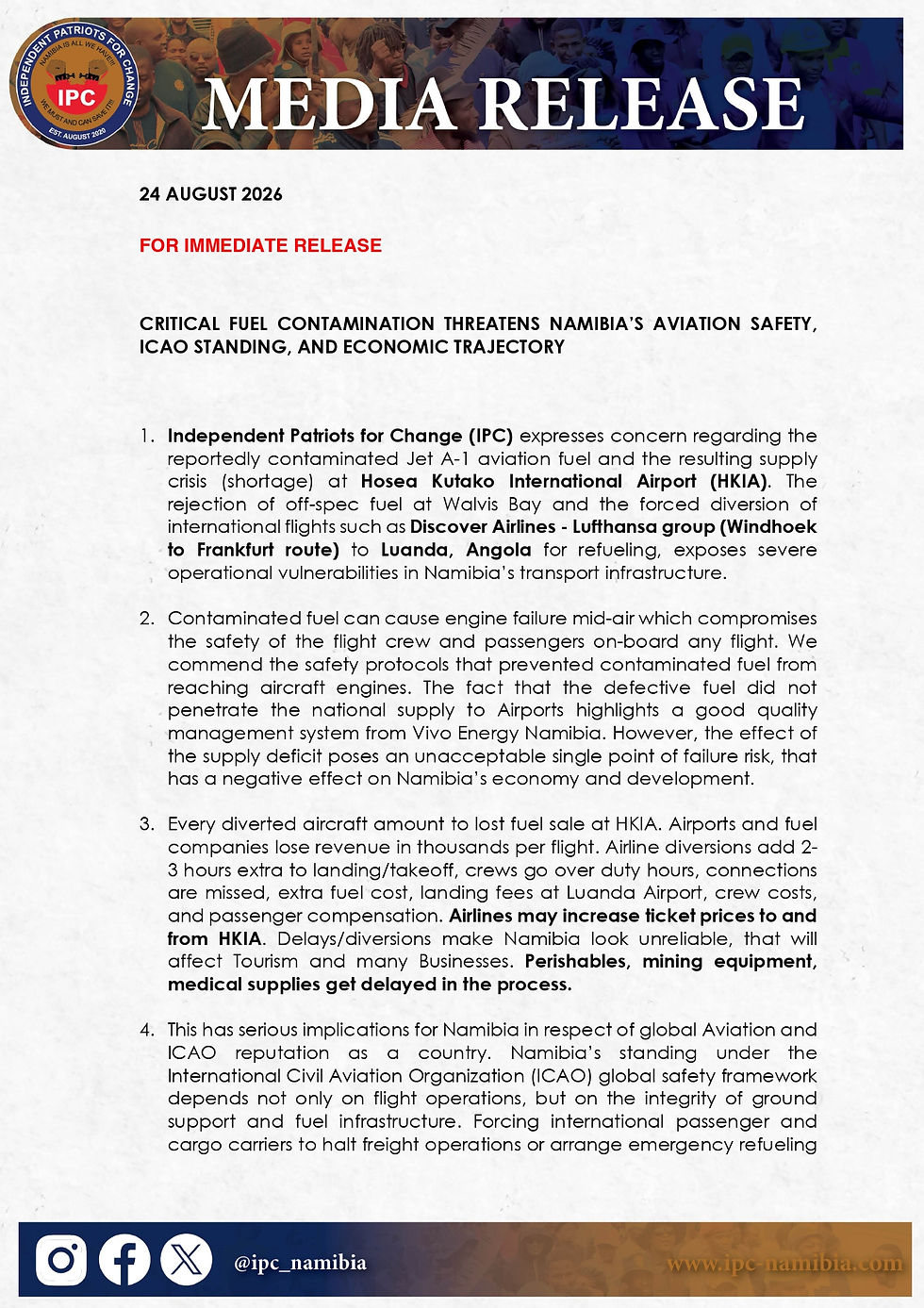
The recent distribution of off-spec Jet A-1 fuel at Walvis Bay and the resulting supply crisis at Hosea Kutako International Airport (HKIA) represent a critical failure in our transport logistics infrastructure. While quality management systems correctly prevented contaminated fuel from reaching aircraft engines, forcing international flights to divert to Luanda for refuelling exposes unacceptable single-point-of-failure risks.
Flight diversions do not merely cause delays; they inflict severe reputational and financial damage. Diverted flights cost thousands in lost fuel sales at HKIA, add operational burdens to airlines, delay perishable cargo, and damage Namibia's standing under International Civil Aviation Organisation (ICAO) safety standards.
Plans to launch a state air carrier by December cannot take precedence over basic operational security. Introducing a new national fleet into an environment that struggles with basic fuel reliability puts public capital at risk.
The IPC calls on the government to:
Conduct emergency supply audits of single-supplier arrangements and quarantine protocols.
Establish expanded physical, tested strategic Jet A-1 fuel reserves at key hubs.
Provide transparent operational reporting to reassure international aviation partners.


Comments