The Trade Impact of the FMD Outbreak: Why Export Markets Are Collapsing
Updated: Oct 12
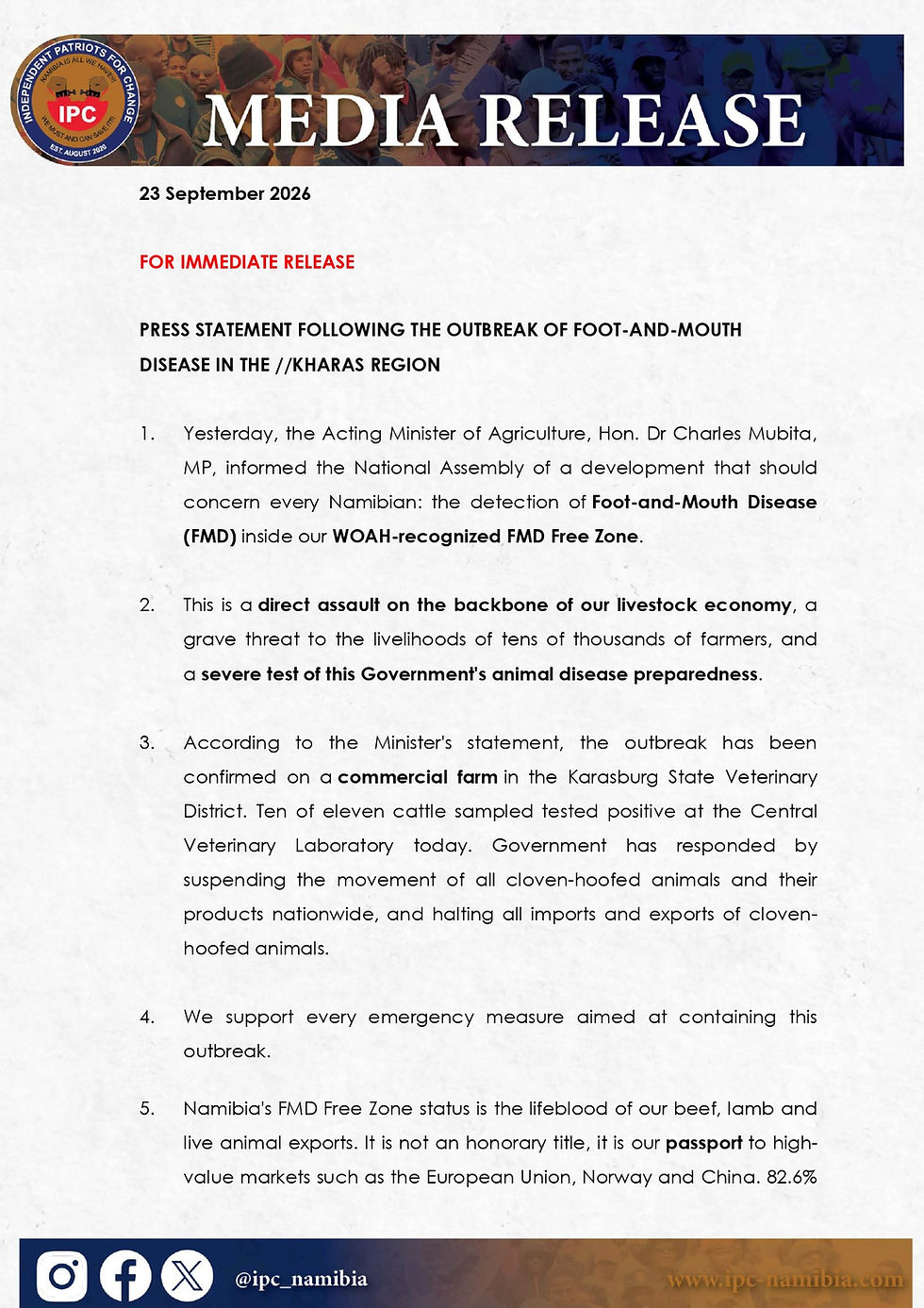
When foot-and-mouth disease breached the free zone on 23 September 2026, it instantly transformed into a national trade emergency that required aggressive diplomatic engagement in embassies and veterinary agencies abroad. Yet, the two responsible Ministers from Agriculture and Trade were absent in New York at the United Nations, leaving ordinary Namibians to comb foreign websites for news regarding their own beef exports while government briefings refused to take questions from journalists. Silence from a Minister abroad remains complete silence at home.
The practical consequences of this administrative vacuum are severe. On 24 September 2026, the United Kingdom's Animal and Plant Health Agency instructed its veterinary surgeons to hold every consignment of fresh Namibian beef, mutton, and goat meat, swiftly followed on 25 September by the withdrawal of certificates for the entire FMD-free zone. With Simonis Storm estimating that approximately 60 per cent of beef export earnings, valued at N$3.3 billion annually, stem from European, British, and Norwegian markets, this disruption threatens 12,000 jobs and inflicts an estimated N$1.8 billion in costs over 2026 and 2027. Meanwhile, Meatco and Savanna Beef are left in the dark without essential cut-off dates for shipments already on the water or in ports.
A Ministry that failed for eleven months to answer Question 255 regarding South Africa's agricultural export suspension in 2025 is now catastrophically unequipped to manage five major markets simultaneously. The commercial farmers outside Karasburg, deboning-line workers at Meatco, and kapana sellers at Single Quarters cannot survive on ministerial absence and empty assurances. The IPC demands that the Ministry immediately publish a market-by-market bulletin updated every 48 hours detailing closures, exact requirements, and cut-off dates so that Namibian producers are no longer forced to rely on foreign intelligence for their economic survival.


Comments